JEE Advanced syllabus: Physics, Chemistry and Maths chapter-wise, with what is excluded
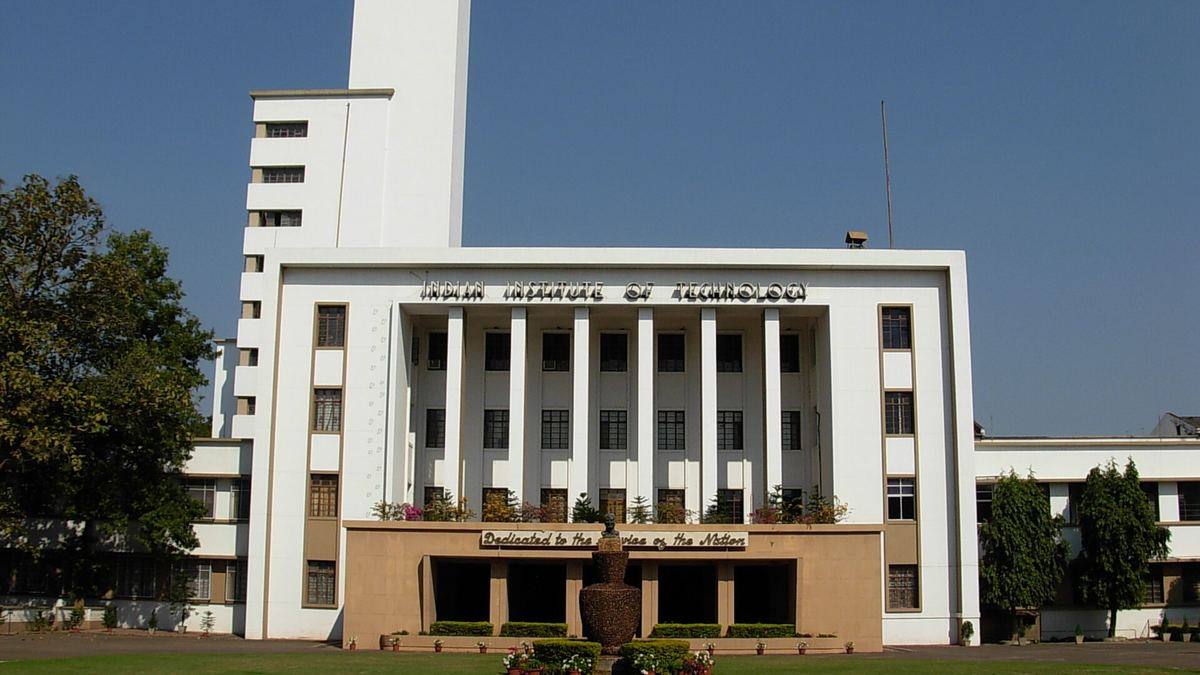
The JEE (Advanced) syllabus covers Physics, Chemistry and Mathematics at the Class 11 and 12 level. The official JEE (Advanced) 2026 syllabus says it "remains the same as JEE Advanced 2025", and the 2027 syllabus has not been published yet (checked on jeeadv.ac.in on 26 October 2026). So the chapters below are the ones to prepare for 2027 unless the 2027 brochure says otherwise. Both papers test all three subjects: each subject is 60 marks in Paper 1 and 60 in Paper 2, so 120 per subject and 360 in all, on the scheme printed on the 2026 papers.
How the syllabus is examined
| Paper 1 | Paper 2 | |
|---|---|---|
| Time | 3 hours | 3 hours |
| Subjects | Physics, Chemistry, Mathematics | Physics, Chemistry, Mathematics |
| Marks per subject (2026) | 60 | 60 |
| Question types (2026) | Single correct, one or more correct, numerical, matching list | Single correct, one or more correct, numerical, paired numerical |
The question types and marks are not fixed by the brochure; they are given in the instructions on the day, and a later year can change them. The syllabus, though, is fixed in the document above.
JEE Advanced Physics syllabus
| Unit | Chapters and topics |
|---|---|
| General | Units and dimensions, dimensional analysis, least count, significant figures, error analysis; experiments with Vernier callipers and screw gauge, simple pendulum (g), Young's modulus, surface tension by capillary rise, specific heat with a calorimeter, focal length by the u-v method, speed of sound with a resonance column, Ohm's law, meter bridge and post office box |
| Mechanics | Kinematics in 1D and 2D, projectiles, circular motion, relative velocity; Newton's laws, friction, work, energy and power; centre of mass, impulse, collisions; rigid bodies, moment of inertia, torque, angular momentum, rolling; forced and damped oscillation; simple harmonic motion; Hooke's law; gravitation, Kepler's laws, satellites, escape velocity; fluids: Pascal's law, buoyancy, surface tension, viscosity, Stokes' law, Bernoulli's theorem; waves, standing waves, beats, Doppler effect (sound) |
| Thermal physics | Thermal expansion, calorimetry, latent heat, conduction, convection and radiation, Newton's law of cooling, ideal gases, Cv and Cp, isothermal and adiabatic processes, first and second laws, Carnot engine, blackbody radiation, Wien's and Stefan's laws |
| Electricity and magnetism | Coulomb's law, field and potential, dipoles, Gauss's law, capacitors, current electricity and Kirchhoff's laws, Biot–Savart and Ampère's laws, force on charges and currents, magnetic moment, galvanometer conversions, electromagnetic induction, self and mutual inductance, RC, LR, LC and LCR circuits |
| Electromagnetic waves | Characteristics and the electromagnetic spectrum, with uses |
| Optics | Reflection and refraction at plane and spherical surfaces, total internal reflection, prisms, thin lenses and combinations; Huygens' principle, Young's double slit, single-slit diffraction, polarisation, Brewster's law |
| Modern physics | Nucleus, radioactive decay, half-life, binding energy, fission and fusion; photoelectric effect, Bohr's theory, X-rays and Moseley's law, de Broglie wavelength |
JEE Advanced Chemistry syllabus
| Part | Chapters |
|---|---|
| Physical chemistry | Mole concept and stoichiometry; gases and liquids; atomic structure; chemical bonding; thermodynamics; chemical and ionic equilibrium; electrochemistry; chemical kinetics; solid state; solutions; surface chemistry |
| Inorganic chemistry | Periodicity; hydrogen; s-block; p-block (groups 13 to 18); d-block; f-block; coordination compounds; isolation of metals; qualitative analysis; environmental chemistry |
| Organic chemistry | Basic principles (isomerism, stereochemistry up to two asymmetric centres, IUPAC naming, electronic effects, reactive intermediates); alkanes; alkenes and alkynes; benzene; phenols; alkyl halides; alcohols; ethers; aldehydes and ketones; carboxylic acids; amines; haloarenes; biomolecules; polymers; chemistry in everyday life; practical organic chemistry |
JEE Advanced Mathematics syllabus
| Unit | Topics |
|---|---|
| Sets, relations and functions | Sets and their algebra, relations, equivalence relations, functions and their types, composition, special functions (greatest integer, absolute value and others) |
| Algebra | Complex numbers, quadratic equations, AP and GP, sums of series, logarithms, permutations and combinations, binomial theorem |
| Matrices | Matrix operations, determinants and inverses up to order three, special matrices, systems of linear equations |
| Probability and statistics | Probability rules, conditional probability, Bayes' theorem, mean, median, mode, variance and standard deviation, random variables |
| Trigonometry | Functions and graphs, identities, general solutions of equations, inverse trigonometric functions |
| Analytical geometry | Straight lines, circles, parabola, ellipse, hyperbola, locus; 3D lines and planes, skew lines, shortest distance |
| Differential calculus | Limits, continuity, L'Hospital's rule, derivatives, tangents and normals, maxima and minima, Rolle's and Lagrange's theorems |
| Integral calculus | Indefinite and definite integrals, area under curves, first-order differential equations |
| Vectors | Dot and cross products, scalar and vector triple products |
What the syllabus leaves out
The official document excludes some topics by name. Knowing them saves time:
- Physics: Poiseuille's equation (viscosity is in, the equation is not); kinematics is in Cartesian coordinates only; first law applications are for ideal gases only.
- Chemistry: R,S and E,Z configurations; stereochemistry beyond two asymmetric centres; the stereochemistry of addition and elimination in alkenes; the benzyne mechanism and cine substitution in haloarenes; drug structures (only examples and therapeutic action); fluoride in qualitative analysis.
- Mathematics: inverse trigonometric functions are for principal values only; determinants and inverses only up to order three.
A plan that follows the syllabus
- Map the overlap with JEE Main first. Most JEE Advanced chapters are also in JEE Main, so one pass serves both. Our JEE Main 2027 guide has its dates.
- Then go deeper than Main needs. Advanced questions often combine two or three concepts in one problem, so practise multi-step problems in each chapter once its basics are secure.
- Practise the question types, not just the chapters. One-or-more-correct questions with partial marking and negative marking need a different decision than single-correct ones.
- Sit both papers on the same day in practice, six hours with a break, as in the real exam. Start with a free JEE Advanced mock test, then analyse it chapter by chapter.
Useful links
- JEE (Advanced) 2026 syllabus (PDF, jeeadv.ac.in)
- JEE Advanced 2027: exam date, eligibility and how to apply
- JEE Advanced syllabus page
- Free JEE Advanced mock tests
- JEE Main 2027: exam date and how to apply
Frequently asked questions
Has the JEE Advanced syllabus changed for 2027?
The 2027 syllabus has not been published yet. The official 2026 syllabus says it is the same as 2025's, so prepare from it and check the 2027 brochure when it comes out on jeeadv.ac.in.
Is the JEE Advanced syllabus the same as JEE Main?
Largely, but not exactly. Both cover Class 11 and 12 Physics, Chemistry and Mathematics, but each has its own official list. Check the topics in each document rather than assuming one covers the other.
How many marks does each subject carry in JEE Advanced?
On the 2026 papers, each subject was 60 marks in Paper 1 and 60 in Paper 2: 120 per subject and 360 in total. The brochure does not fix these numbers, so a later year can change them.
Is the experimental physics part of the JEE Advanced syllabus?
Yes. The General unit of Physics lists experiments such as the Vernier callipers and screw gauge, the simple pendulum, the meter bridge and the resonance column, with error analysis.
Is stereochemistry in the JEE Advanced syllabus?
Yes, for compounds with up to two asymmetric centres (enantiomers, diastereomers, meso). R,S and E,Z configurations are excluded.